Gardening

July Lawn Care: Surviving the Heat and Taming the Post-Vacation Jungle

Welcome to July in San Antonio! If your neighborhood is anything like mine, the South Texas summer heat is officially in full force. This time of year, lawn care shifts from “growth and heavy maintenance” to pure “survival and management.”

I actually just got back from a fantastic two-week family vacation, and as you can probably guess, two weeks away in the peak of summer means returning home to an absolute jungle. Managing a lawn after being away introduces a classic dilemma, so let’s talk about how to tackle that first cut without destroying your grass, along with our usual July game plan.

The Post-Vacation Cut: The 30% Rule

When you look out at a lawn that hasn’t been touched in two weeks during prime growing season, the immediate impulse is to drop the mower deck to its regular height and hack it all down in one aggressive pass. Don’t do it. Hacking off too much of the grass blade at once shocks the plant, slices into the stem, and leaves you with a brown, stressed-out yard that will struggle under the July sun.

Instead, I used a technique to safely work the lawn back down to its regular level:

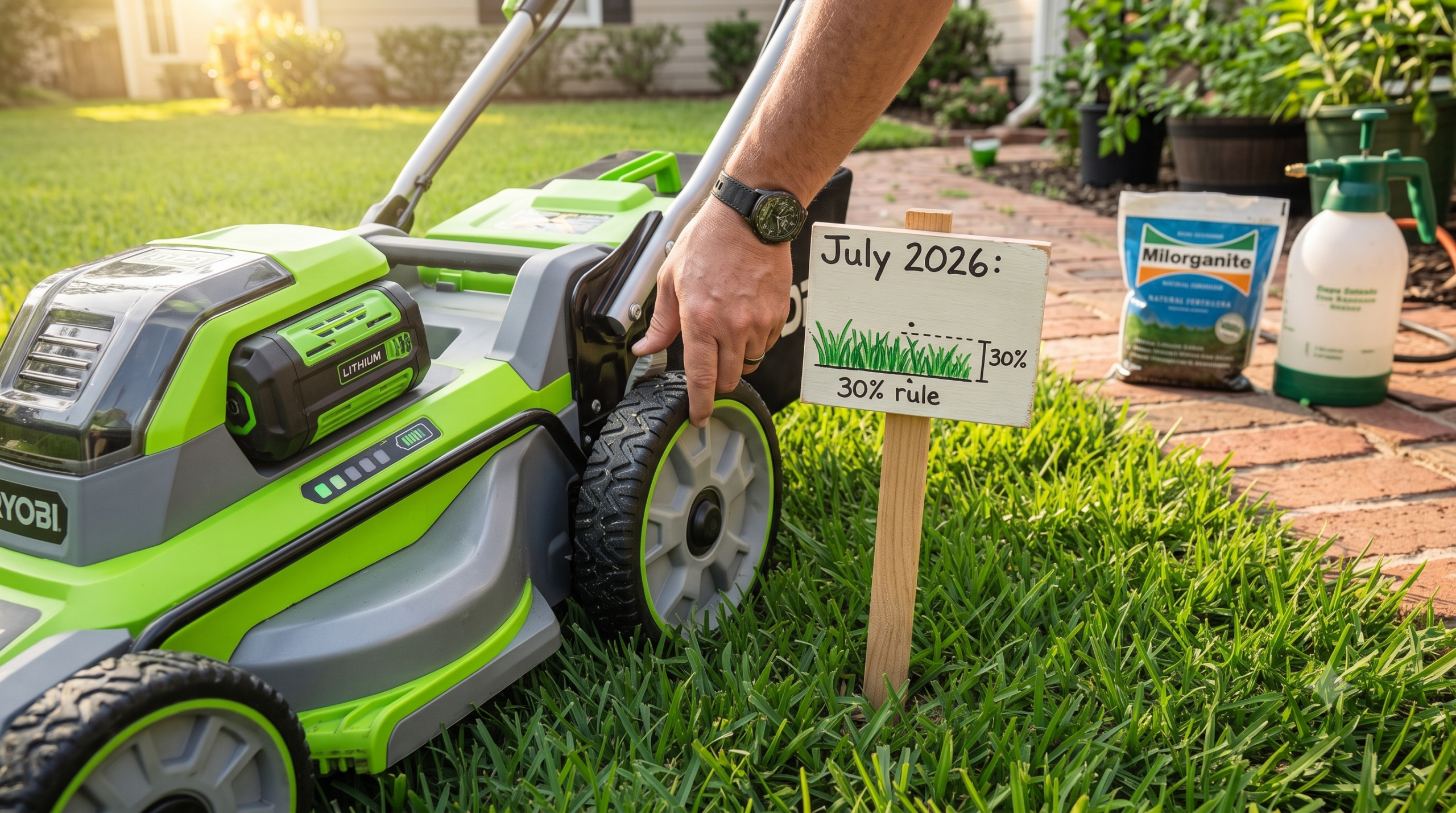
  1. Raise the Mower Deck: Before I even started the lawnmower, I clicked my mower up a couple of notches higher than my standard maintenance height.

  2. Follow the 30% Rule: The goal for the first cut back was to ensure I wasn’t removing more than 30% (or 1/3) of the total height of the leaf blades.

  3. Gradual Reduction: By taking off just the top section, the lawn stays green, protects its root system, and avoids sudden shock. Over the next couple of mowings spaced a few days apart, I will gradually lower the deck back down to my regular summer height.

If you are returning from summer travel, save your grass the trauma and take it down in stages rather than opting for a harsh, short cut.

July Lawn Maintenance Strategy

Beyond managing a post-vacation jungle, July in San Antonio requires a very specific approach to water, weeds, and fertilizer. Here is the breakdown of what you should—and shouldn’t—be doing right now.

1. Dial In the Watering

The absolute biggest priority this month is keeping up with moisture. Your lawn needs about one inch of water per week to stay green and resilient.

  • On weeks where we get a good summer downpour, let nature do the work.

  • On dry weeks, make sure your irrigation or sprinklers are filling the gap.

  • Watch for Hot Spots: Pay close attention to areas along concrete sidewalks, driveways, or spots with poor soil. These absorb heat and dry out much faster than the rest of the yard. Keep a hose handy to give those specific areas some extra hand-watering to counteract the heat reflection.

2. Halt the Heavy Fertilizers

It is simply too hot to push your lawn right now. Applying high-nitrogen synthetic fertilizers during a San Antonio July is incredibly risky and a fast track to burning your grass.

Instead, stick to a gentle, organic approach. I prefer putting down a natural option like Milorganite. It doesn’t risk burning the lawn because it relies on soil microorganisms to break it down and feed the grass naturally. Additionally, I stick to my regular schedule of applying a pre-emergent every other month to stop new weeds from taking hold before they start.

3. Spot-Treat Weeds Only

Do not go out and blanket-spray your entire yard with liquid weed killers right now. High ambient temperatures combined with heavy herbicide applications will severely stress or kill your turf grass. If you have a few stubborn weeds pushing through, use a hand-held sprayer to spot-treat them directly and precisely, leaving the rest of the grass unbothered.

4. Pest Control

Don’t forget the bugs. July is prime time for turf pests to do undercover damage. Keeping up with a targeted pest treatment every other month has given me great results and keeps the lawn protected when it’s at its most vulnerable.

July lawn care isn’t about forcing major changes; it’s about smart preservation, steady hydration, and knowing how to handle the grass when life (and vacation) takes you away for a bit. Raise that mower deck, keep the water moving, and let’s get through the peak of summer together.

How is your yard holding up against the July heat? Let me know in the comments below!

July Lawn Care: Surviving the Heat and Taming the Post-Vacation Jungle Read Post »

March Lawn and Garden Care in San Antonio

March is when yards in San Antonio start waking up.

The days are getting longer, the soil temperature is climbing, and Bermuda lawns across the city are beginning to show the first hints of green. If you’ve been following my earlier guides on preparing for early yard care and how to scalp your lawn, this is when that preparation begins to pay off.

March is a transition month. Winter cleanup is wrapping up and the growing season is about to begin.

A few simple tasks now will make a huge difference in how your lawn and garden perform once the Texas heat arrives.

Finish Scalping Your Bermuda Lawn

If you haven’t already done it, early March is usually the last good window to scalp Bermuda grass.

Scalping removes the dormant brown growth from last year and allows sunlight to reach the crowns of the grass. It speeds up spring green-up and helps the lawn grow in thicker once the soil warms.

If you want a detailed step-by-step explanation, read my guide:
👉 How Do I Scalp My Lawn?

Start Feeding the Soil

March is when the soil ecosystem begins to wake up. Microbes become active again, which means it’s the perfect time to begin feeding the soil.

Healthy soil leads to healthy grass.

In Lawn Care: The Good Stuff I talked about one of my favorite simple approaches: using organic fertilizers that improve soil biology instead of just forcing grass growth.

One of the easiest options is chicken crumble feed. It’s inexpensive, widely available, and slowly breaks down into nutrients that feed soil microbes.

Organic fertilizers don’t give the instant dark green look of synthetic fertilizers, but they build healthier soil over time, which leads to stronger turf during our brutal Texas summers.

Repair Thin or Bare Spots

Once your lawn has been scalped, you’ll be able to clearly see problem areas that were hidden during winter.

March is a great time to:

  • Fill low spots with soil
  • Add compost to thin areas
  • Break up compacted soil
  • Repair winter damage

Bermuda spreads aggressively once temperatures warm up, so many small bare areas will fill in naturally once growth begins.

For a broader seasonal plan, see the full San Antonio Lawn Care Schedule, which walks through what to do each month.

Prepare Garden Beds for Spring Planting

March is also when garden beds need attention again.

Winter weeds and dead plant material should be cleared so new plants have space to grow. In Clearing Garden Space I talk about why doing this early makes the entire gardening season easier.

Typical tasks for March include:

  • Removing winter weeds
  • Clearing dead plants
  • Loosening garden soil
  • Adding compost or organic matter
  • Refreshing mulch

Start Thinking About Soil and Seeds

With garden beds cleaned out, it’s time to think about planting.

In Soil, Seeds, and Other Stuff I talk about why soil preparation matters just as much as what you plant.

San Antonio’s growing season starts early, so March is when many spring vegetables can go in the ground.

Common March plantings include:

  • Tomatoes
  • Peppers
  • Squash
  • Beans
  • Herbs

Just keep an eye out for the occasional late cold front.

Check Irrigation Before the Heat Arrives

Before the summer heat hits, March is a great time to test your irrigation system.

Run each zone and check for:

  • broken sprinkler heads
  • misaligned spray patterns
  • leaks
  • dry spots

Fixing irrigation issues now prevents a lot of frustration once temperatures start pushing 100°.

This type of routine yard maintenance is exactly why I wrote Let’s Mow the Lawn the small things done consistently make a big difference.

Getting Ahead of the Season

Good lawns in San Antonio aren’t built in April or May.

They’re built with the preparation you do in March.

If you want a deeper look at what should be happening throughout the season, these guides may help:

Spring is here.

The lawn is waking up.

And that means it’s time to get outside and mow the lawn.

March Lawn and Garden Care in San Antonio Read Post »

Time to prepare for early yard care

We are coming to the end of January here in San Antonio and February is typically our last month of cold. With spring coming up it’s a great time to prepare by doing some yard maintenance and getting lawn care materials.

First check when it’s best to trim your trees. Mine do best getting trimmed in the winter, so I have taken care of that.

Next while the lawn is dormant it’s a great time to expand any flower beds or planters you might have. I like to slowly expand my bricks around my tree ring every year as an example.

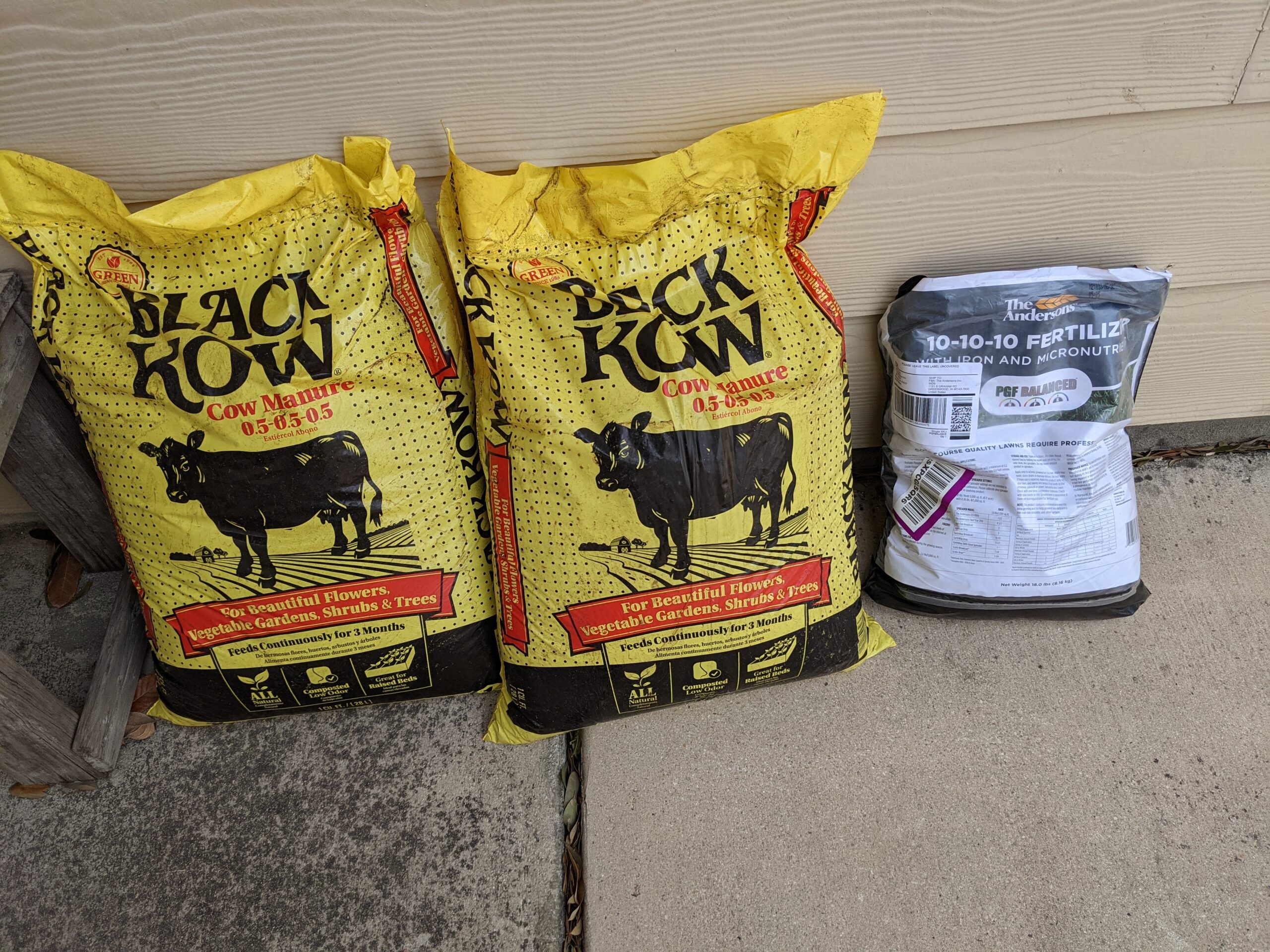
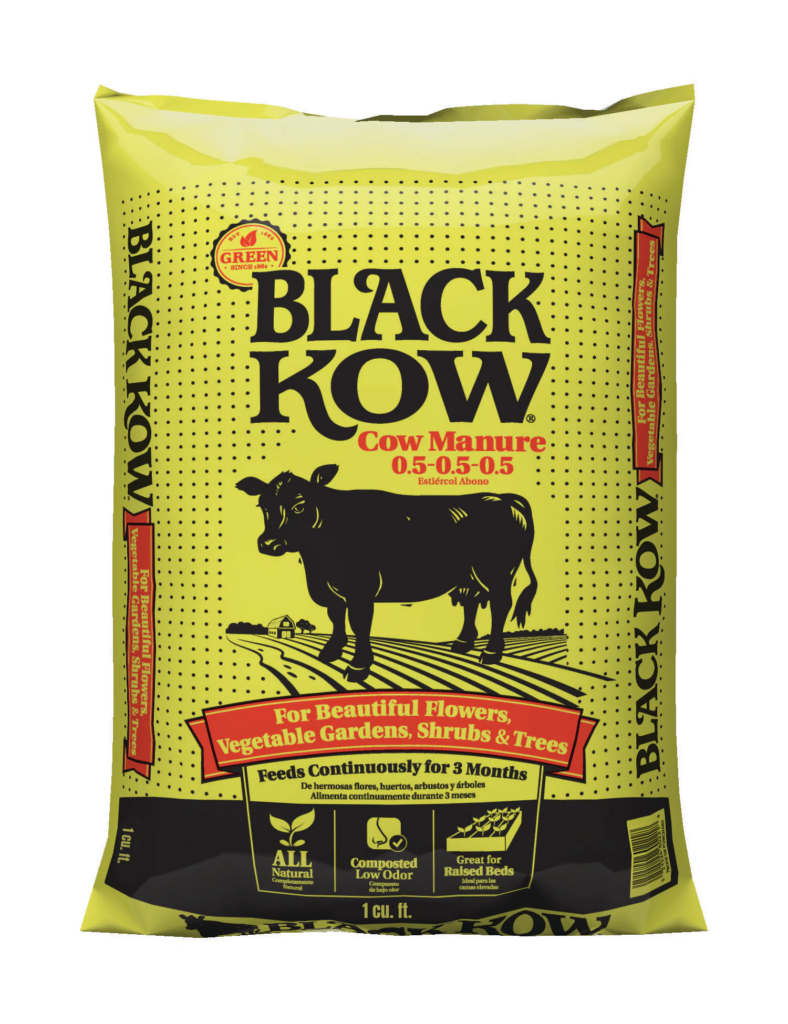
The next thing you might look at is getting a balanced fertilizer and some composted manure to place down at the end of winter/beginning of spring. I like the Andersons PGF Balanced and Black Kow composted manure. They are both gentle balanced products great for bringing the yard back to life.

Time to prepare for early yard care Read Post »

Control your year round water bill in San Antonio

On your water bill you see a thing that is referencing your sewer bill. But how do they figure that out? During the late fall to early spring SAWS takes what is called a winter average. This is taken by averaging your water usage during these moths So to control your water bill year round, all you have to do is reduce your water usage during those months. Typically lawns go dormant during this time so watering them is a waste and not watering is one easy area to save your water usage.

Control your year round water bill in San Antonio Read Post »